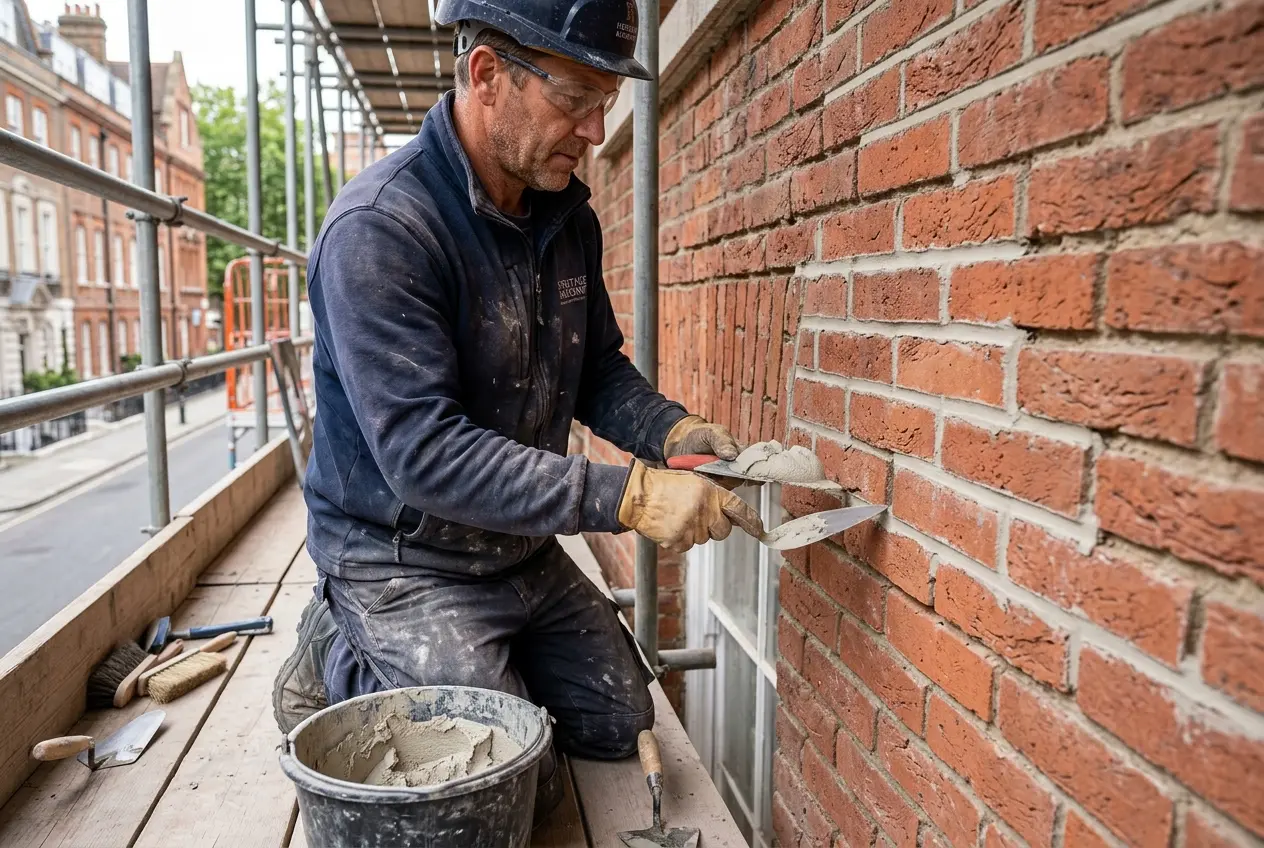
Philadelphia's freeze-thaw cycles destroy mortar joints faster than anywhere in the country. Our repointing process starts with pneumatic removal of degraded mortar without damaging historic bricks. We custom-blend Type N or Type O mortar to match your building's original composition and color.
Special attention goes to row house party walls where failed mortar compromises fire safety. For Art Museum area brownstones, we incorporate subtle tint variations to maintain patina. Every joint gets tooled to proper compression strength before we apply our proprietary weatherproofing sealant.
Special attention goes to row house party walls where failed mortar compromises fire safety. For Art Museum area brownstones, we incorporate subtle tint variations to maintain patina. Every joint gets tooled to proper compression strength before we apply our proprietary weatherproofing sealant.
Our Process
- 01 Step 1: Scaffold setup with historical district-approved protection
- 02 Step 2: Mortar analysis and matching using local sand aggregates
- 03 Step 3: Precision grinding of failed joints to 2x depth standard
- 04 Step 4: Hand-packing and tooling with concave profile for water runoff
Benefits
- Prevents water intrusion behind brick veneers
- Maintains historical accuracy for regulated districts
- Extends wall lifespan 15-20 years
- Reduces winter heat loss through gaps
Frequently Asked Questions
How often should Philly row houses be repointed?
Every 30-50 years depending on exposure. South-facing walls near the Delaware River need attention sooner due to salt spray.
Do you work with lime mortar for pre-1900 buildings?
Yes - we maintain separate mixing stations for modern Portland cement and traditional lime formulations.